
The Ghost Flights of Beijing: Why China’s Aviation Boom Is Bleeding Billions
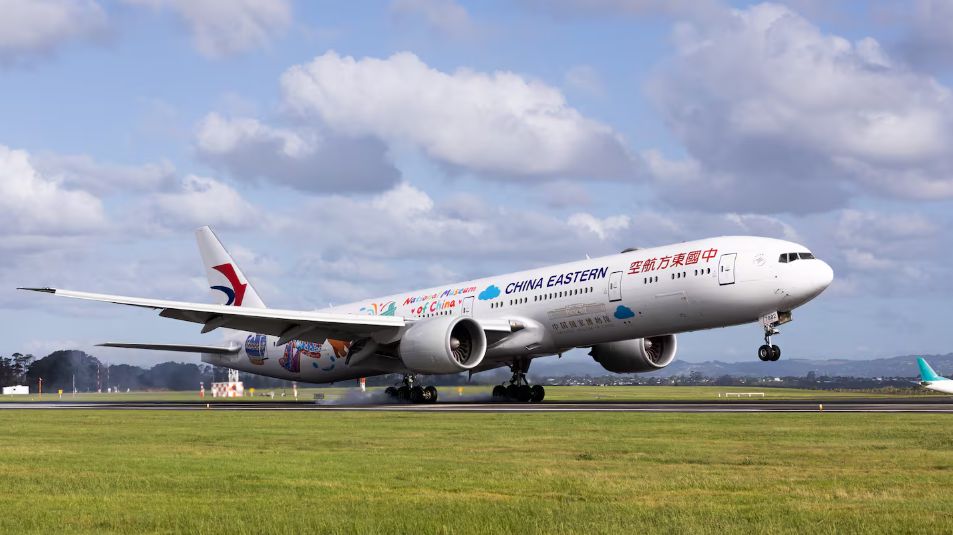
On paper, China’s commercial aviation sector looks like a textbook post-crisis success story. Terminals are crowded, passenger turnover is climbing double digits, and top-line revenues are marching steadily upward. If you only glance at state-level press releases or airport departure boards, you would assume the industry is riding an unstoppable wave of recovery.
Look under the hood, however, and the financial reality is an absolute bloodbath.
According to a recent operational briefing by Tony Fiddis at China News Update, the country’s "Big Three" state-backed legacy carriers—Air China, China Eastern Airlines, and China Southern Airlines—swallowed a combined net loss of 8.16 billion yuan (roughly US$1.2 billion) over the first half of the year. This didn’t happen during a slump. It happened alongside a healthy 10% revenue expansion across all three giants.
More seats sold. More planes in the sky. More money lost.
To understand why this is happening—and why it serves as a glaring case study of the structural traps within modern energy logistics and state-directed capitalism—we have to look at the violent collision between global commodity spikes and rigid domestic transport infrastructure.
The Anatomy of an Energy Trap
At its core, aviation economics is simple and merciless. An airline manufactures one perishable product: the available seat kilometre (ASK). If that seat takes off empty, or if the price paid for it fails to cover the marginal cost of burning jet fuel and servicing aircraft debt, the carrier bleeds capital.
China Southern, the country’s largest carrier by fleet size, logged the heaviest hit: a staggering 3.7 billion yuan net loss. The culprit is not mysterious. It is a textbook margin squeeze brought on by an unmitigated global energy shock.
Data from S&P Global reveals that global jet-fuel prices surged to an average of US$164 per barrel—an eye-watering 82% spike year-on-year.
Historically, aviation kerosene represents roughly 30% of a commercial airline’s operating expenditures. Today, that ratio is disintegrating. China Eastern reported that fuel has eaten its way up to nearly 40% of its total operating costs following a 36% jump in its annual fuel bill. At China Southern, fuel expenditures ballooned 38% to hit a monstrous 34.9 billion yuan.
In a textbook free-market environment, an airline hit with an 82% jump in its primary input cost pulls the obvious lever: it passes the bill to the customer via base fare increases and aggressive fuel surcharges.
Chinese state carriers cannot do this. They are trapped in a vice where one jaw is an immovable global commodity market, and the other is a customer base completely unwilling—and unable—to absorb price hikes.
Cannibalised by the Steel Dragon
Why can’t Chinese state carriers raise fares to defend their margins?
The answer lies beneath their flight paths: China’s high-speed rail (HSR) network.
Over the past two decades, Beijing poured hundreds of billions of dollars into constructing the largest high-speed rail grid on Earth, spanning tens of thousands of kilometres. For years, Western analysts marvelled at the sheer scale of the engineering. But infrastructure projects do not exist in an economic vacuum. They create profound competitive side effects.
On almost every high-density domestic route under 1,000 kilometres—the bread-and-butter corridors that traditional airlines rely on to generate cash flow—the bullet train doesn’t just compete; it dominates. A passenger travelling between major commercial hubs can arrive at a central city railway station fifteen minutes before departure, board a train running at 350 km/h, browse uninterrupted high-speed internet, and disembark directly in the centre of their destination city without baggage carousels or tarmac delays.
High-speed rail has effectively set a hard ceiling on domestic airfares. The moment an airline tries to raise ticket prices or hike fuel surcharges to offset $160-plus oil, travellers simply walk across the terminal plaza and buy a train ticket. State airlines find themselves in a war of attrition against state-subsidised rail—and the train holds all the structural advantages.
The Wide-Body Gluttons
The crisis is not confined to domestic skies. The international picture reveals an even deeper misallocation of capital.
During the global travel freeze, dozens of massive, long-haul wide-body jets—Boeing 777s, 787s, and Airbus A350s—were either parked on desert aprons or relegated to domestic trunk routes where they burnt ungodly amounts of fuel running inefficient, short-cycle hops.
As borders reopened, international passenger volumes did tick up—rising between 12% and 14% across the Big Three. But restored flight paths have overwhelmingly targeted Europe, Central Asia, and the Middle East, regions characterised by sky-high airspace navigation charges, complex routings, and brutal price wars with foreign flag carriers.
Airlines brought their fuel-thirsty wide-body fleets back into service to reclaim market share, but filling a wide-body at discount yields while burning $164 per barrel of fuel is worse than leaving the aircraft in a hangar. It multiplies the cash burn with every takeoff cycle. They have bought passenger volume at the direct expense of operational solvency.
Low-Cost Agility vs. State Inertia
The starkest indictment of the state carriers’ performance is that private capital managed to dodge the worst of the carnage.
Privately controlled carriers—most notably Spring Airlines, Hainan Airlines, and Juneyao Airlines—stayed in the black, even as their operating margins narrowed. Spring Airlines stood out as the only publicly listed Chinese carrier to post a genuine net profit in the second quarter, largely by hacking its non-fuel unit costs down by nearly 5%.
Low-cost carriers (LCCs) operate with brutal discipline: single-engine-type narrow-body fleets, ultra-dense seating configurations, lightning-fast turnaround times, and ruthless unbundling of ancillary fees. They cut fat that state-owned giants are structurally forbidden from touching.
State-owned airlines carry unique, non-commercial burdens. They are expected to maintain prestige routes, support regional employment quotas, purchase specific airframes for geopolitical leverage, and serve national connectivity mandates regardless of route profitability. When jet fuel was cheap, these inefficiencies were masked by sheer volume. In an era of high-cost energy, that bureaucratic deadweight pulls the balance sheet directly to the seafloor.
The Geopolitical Bill Comes Due
The crisis shaking China's aviation sector is not an isolated transportation hiccup; it is a clear symptom of a much larger macroeconomic vulnerability.
China remains the world’s largest crude oil importer. Despite its staggering domestic investments in solar arrays, battery manufacturing, and electric vehicles, its aviation, petrochemical, and heavy transport networks remain hardwired to imported fossil fuels. When instability or output cuts shake the Middle East and send crack spreads on jet kerosene through the ceiling, the shockwaves bypass Beijing’s regulatory firewalls and land straight on the balance sheets of its flagship enterprises.
Volume cannot cure an inverted margin. Until global energy markets cool off, or until Beijing permits its legacy carriers to drastically prune unprofitable routes and pass genuine market costs on to travellers, the Big Three will continue to fly into a severe economic headwind: packing planes to the gills while running a multibillion-dollar bonfire on the runway.