How China Is Quietly Rewriting the Rules of Global Diplomacy at APEC
By Tony Fiddis | Independent China Analyst
If you want to understand how geopolitics actually works, don't look at the meticulously crafted communiqués released at the end of international summits. Look at the seating charts, the shuttle bus schedules, and the coffee breaks.
For decades, the Asia-Pacific Economic Cooperation (APEC) forum has operated on a deceptively simple premise: bring the leaders of 21 member economies together in one room, strip away the stiff diplomatic choreography, and let them talk. The real value of APEC has never been the formal speeches broadcast to the global press. Rather, it is the unscripted, off-the-record conversations in hallways and informal retreats where presidents and prime ministers test compromises, clarify muddled intentions, and occasionally discover that their carefully rehearsed talking points do not survive contact with another human being.
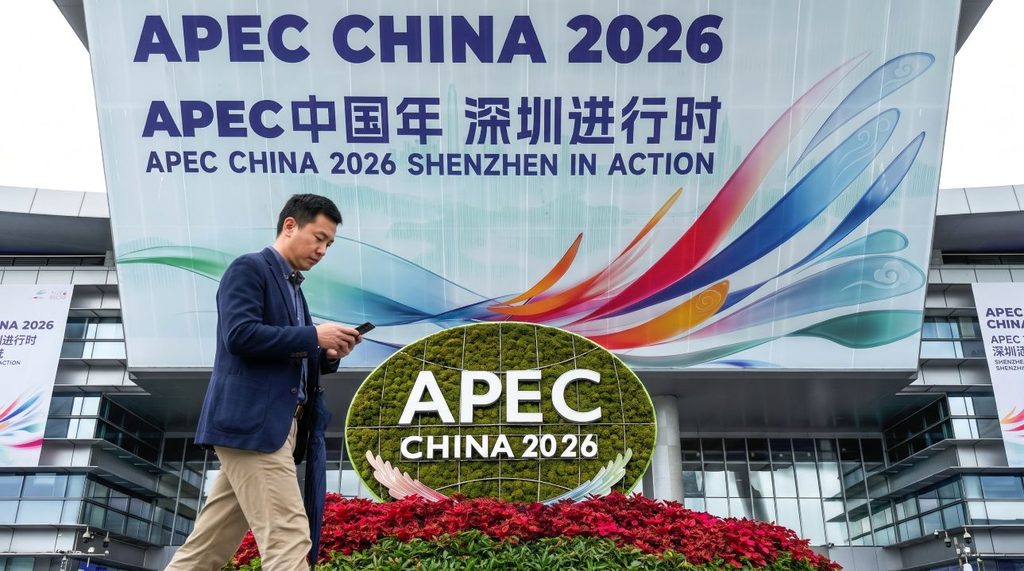
Yet, as Beijing prepares to host the upcoming APEC summit in Shenzhen, the script is being aggressively rewritten. According to recent diplomatic reporting, the gathering has been substantially shortened. The traditional informal leadership retreats—the very spaces designed to foster spontaneous consensus—have been unceremoniously axed. Even more tellingly, bilateral meetings with Chinese President Xi Jinping will not happen on-site. Instead, visiting leaders will be shuttled to a state guest house roughly 20 minutes away from the main proceedings.
On paper, this looks like a mundane logistical tweak. In reality, it is a masterclass in geopolitical stagecraft—and a glaring preview of how Beijing intends to reshape the global order.
The Architecture of Control in Shenzhen
In high-stakes diplomacy, logistics are never just logistics; they are a physical manifestation of power. By eliminating informal retreats and isolating bilateral talks 20 minutes away from the main forum,
Beijing has engineered an environment that maximises the host’s authority while systematically suffocating spontaneous, multi-party exchanges.
When leaders are sequestered in a single resort or conference centre, smaller nations have a fighting chance to corner a superpower, voice regional anxieties, and build ad hoc coalitions. When those same leaders are kept on a tight, shortened schedule and forced to commute to a separate State Guest House for one-on-one audiences with Xi Jinping, the dynamic shifts from a multilateral roundtable to a royal court. You don't mingle with your peers; you wait for your audience with the host.
The Great-Power Triumvirate vs. Multipolar Rhetoric
This structural centralisation becomes even more glaring when you look at the guest list. With both US President Donald Trump and Russian President Vladimir Putin expected to attend, the Shenzhen summit is rapidly morphing from a pan-Pacific economic forum into an exclusive arena for great-power bargaining.
A potential trilateral meeting between Trump, Xi, and Putin—running alongside high-stakes bilateral US–China negotiations—will inevitably suck all the oxygen out of the room. Every camera lens, diplomatic cable, and market-moving headline will fixate on the interplay between Washington, Beijing, and Moscow.
And therein lies an awkward, almost poetic contradiction at the heart of Chinese foreign policy. Beijing routinely champions the arrival of a "multipolar world", positioning itself as the tireless defender of the Global South against Western hegemony. Yet, staging a summit where the fate of the region is hashed out behind closed doors by three nuclear-armed strongmen does not exactly scream "empowerment for smaller economies". It looks less like a democratic multipolar order and more like a 19th-century concert of great powers, with the other 18 APEC economies relegated to the bleachers.
Beijing Wants to Hijack the System, Not Destroy It
To understand why Shenzhen is being orchestrated this way, we have to abandon a common Western misconception: the idea that China wants to burn down the current international system and build a new one from the ashes.
Beijing’s actual strategy is far more sophisticated—and arguably far more effective. China does not want to replace institutions like the United Nations, the World Trade Organization, or APEC. It wants to keep the familiar institutional architecture intact while hollowing out its Western-liberal foundations and rewriting the operating code from the inside.
The Global Governance Initiative Explained
This ambition is codified in Xi Jinping’s Global Governance Initiative, a sweeping diplomatic framework that calls for a "more equitable" international system, amplified influence for developing nations, and a resolute stand against Western unilateralism.
To its supporters across the developing world, this sounds like a long-overdue correction to decades of American and European dominance. To seasoned diplomatic critics, however, it looks like a bait-and-switch. Under Beijing’s vision, global institutions retain their prestigious names and bureaucratic machinery, but they are quietly stripped of their commitment to universal human rights, democratic accountability, and legal constraints on state power.
The distinction is critical. A global order built on frictionless cooperation between sovereign governments is fundamentally different from a system designed to protect individual citizens from the overreach of those very governments. Beijing is selling the former while systematically dismantling the latter.
Soft Power, Hard Cash, and the Taiwan Endgame
China is not relying on lofty diplomatic rhetoric alone to sell this vision. Unlike Washington, whose foreign policy often lurches violently between administrations, Beijing backs its ideological pitch with staggering, tangible capital.
The Belt and Road Initiative (BRI): Over the past decade, China has funnelled more than US$1 trillion into global infrastructure, building ports, railways, and power grids across Asia, Africa, and Latin America.
Next-Generation Tech Diplomacy: Newer initiatives promise developing economies access to Chinese artificial intelligence training, digital infrastructure, and green energy supply chains.
For cash-strapped governments looking to modernise their economies, these are concrete lifelines, not empty slogans printed behind a summit lectern. As Brookings Institution analyst Ryan Hass has pointed out, Beijing uses this dense web of trade dependencies, infrastructure financing, and alternative blocs like BRICS to establish itself as Asia’s undisputed leading power. The goal is to cultivate an environment where neighbouring governments instinctively defer to Beijing’s "core interests"—with Taiwan sitting squarely at the centre of that bullseye, long before China ever needs to apply overt military or economic coercion.
The Leadership Deficit: Influence Without Responsibility
Yet, as the Shenzhen summit approaches, Beijing is running headfirst into a fundamental geopolitical truth: influence and leadership are not the same thing.
Superpower leadership is extraordinarily expensive. Historically, dominant global powers have maintained their status not just by cutting checks but by underwriting global security, acting as lenders of last resort during financial panics, and stepping into the breach to manage distant, intractable crises. Analysts remain deeply sceptical that Beijing has either the appetite or the capability to shoulder those burdens. China’s military might remains heavily concentrated in its immediate neighbourhood, and its track record in resolving conflicts beyond its borders is remarkably thin.
The Ukraine Litmus Test
Nowhere is this gap between ambition and responsibility more exposed than in Russia’s ongoing war in Ukraine. Beijing loudly invokes the sanctity of national sovereignty and the UN Charter whenever it suits its interests, particularly regarding Taiwan, yet it has steadfastly refused to condemn Moscow’s full-scale invasion.
Critics rightly point out the glaring hypocrisy between Beijing’s stated principles and its strategic convenience. Chinese scholars push back, arguing that Beijing cannot simply wave a magic wand and impose peace, pointing to Washington’s own well-documented struggles to end foreign wars.
Behind those academic defences lies a much colder, ruthlessly pragmatic calculation. By remaining on the sidelines—diplomatically backing Moscow while keeping trade flowing—China gets to expand its geopolitical leverage while watching the United States and Europe bleed treasure, munitions, and political bandwidth, managing the crisis.
From a purely realpolitik perspective, letting your rival absorb all the costs and risks of global policing is a brilliant play. But as leaders commute back and forth to that State Guest House in Shenzhen, they will be quietly asking themselves a defining question: when a real crisis hits our shores, will Beijing actually show up to help, or will it just shorten the meeting and lock the doors?