
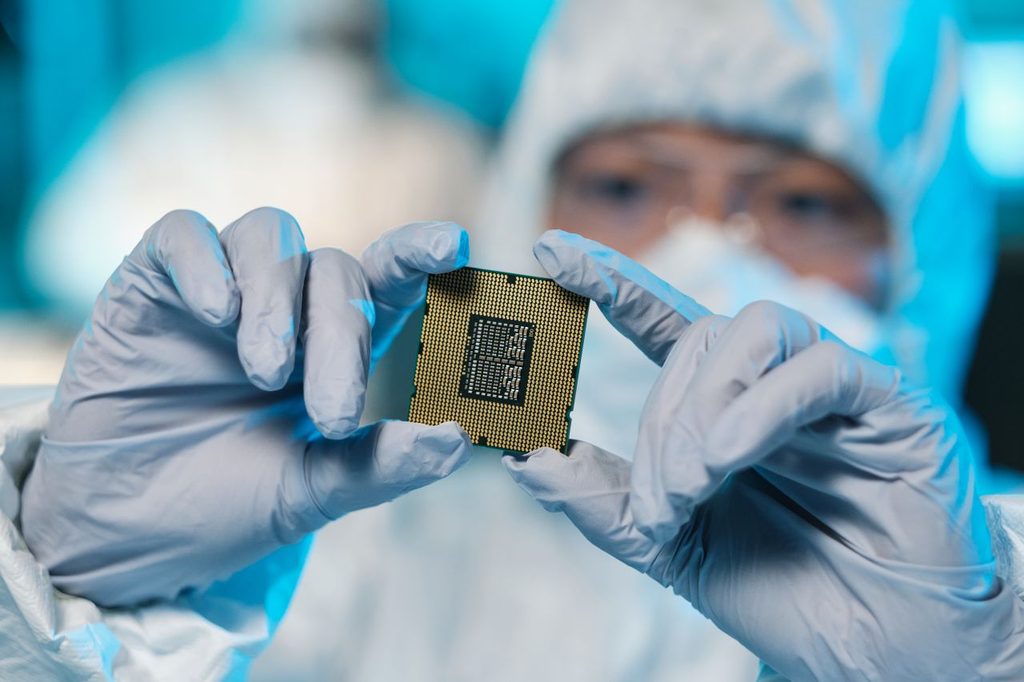
If Nvidia lost Jensen Huang, the US–China chip war would get much nastier.
By Independent China Analyst: Tony Fiddis
For years, Washington and Beijing have operated under a convenient illusion regarding the global semiconductor trade. The narrative goes something like this: the United States restricts the sale of cutting-edge artificial intelligence processors, China protests while subsidising domestic alternatives, and Nvidia continues to sell whatever downgraded silicon remains legally permissible. Business carries on, diplomats shake hands at international summits, and everyone pretends this delicate equilibrium is sustainable.
Unfortunately, this comforting story has a massive, glaring flaw. Artificial intelligence algorithms do not care whether the teraflops of computing power training them arrive in a physical shipping container or via a fibre-optic connection to an overseas data centre. Furthermore, the political compromise holding this fragile arrangement together relies far more heavily on a single executive than either government cares to admit.
Consider the fallout of Nvidia losing its co-founder and chief executive, Jensen Huang, at the exact moment Washington moves to close these remote computing loopholes. Whether sparked by board enquiries into personal relationships or controversies surrounding third-party data centre partners and alleged intelligence links, the geopolitical shockwave extends far beyond corporate governance. What happens to the US-China chip war when America’s most persuasive advocate for continued semiconductor sales to Beijing is suddenly removed from the board?
)
The consequences stretch well beyond a temporary dip in Nvidia’s market capitalisation. They directly impact Chinese AI development, reshape American industrial policy, and destabilise a diplomatic relationship where even a formal trade truce leaves the core technological conflict completely unresolved.
Separating Corporate Scandal from Geopolitical Reality
To understand the fragility of the current tech landscape, we have to separate corporate drama from concrete regulatory mechanics. Scandals involving executive resignations over personal affairs—or federal investigations linking regional cloud providers, such as Singapore-based Megaspeed, to illicit chip diversion and suspected Chinese intelligence operatives—bundle wildly different legal issues together. Combining a corporate governance crisis with espionage allegations produces an explosive headline, yet each strand carries distinct evidentiary standards.
In the real world of semiconductor export controls, legal thresholds matter. A commercial relationship with a foreign data centre operator does not automatically prove a chipmaker had knowledge of smuggling. Similarly, ongoing prosecutions involving server manufacturers over alleged product diversion schemes require rigorous proof in court before anyone can draw straight lines between separate corporate entities.
When Political Perception Outpaces Legal Proof
However, in Washington, political consequences routinely arrive long before legal clarity. Lawmakers on Capitol Hill do not need a completed federal prosecution to argue that existing export frameworks are dangerously permissive. The mere perception that restricted hardware is slipping through corporate cracks is enough to trigger sweeping legislative crackdowns.
The Real Loophole: Remote Access Over Physical Ownership
The central flaw in current AI hardware restrictions is an outdated focus on physical geography. Preventing a crate of advanced graphics processing units (GPUs) from clearing customs in Shenzhen is one thing; stopping a Chinese AI laboratory from renting compute cycles on identical processors housed in Singapore, Malaysia, or the Middle East is another entirely.
A modern AI developer does not need to own a physical chip to train a frontier model. Cloud infrastructure allows firms to access massive overseas computing clusters remotely, rendering border-focused customs enforcement largely irrelevant.
The Rise of Cloud Compute Arbitrage
Supply chains in the modern cloud era are notoriously opaque. A server rack can be legally purchased by a shell company, installed in a neutral jurisdiction, and subleased through multiple intermediaries until the ultimate end-user is completely obscured. Even when independent researchers claim to detect numerical patterns in publicly released Chinese AI models—from labs like DeepSeek or Moonshot AI—that resemble the architectural fingerprints of Nvidia’s Hopper or Blackwell chips, those technical clues cannot independently prove where the servers were located or whether a specific law was broken.
Yet the strategic takeaway for regulators is undeniable: if restricted entities can simply rent the exact computing capability Washington is trying to deny them; stopping boxes at the port is a losing game.
Why Jensen Huang’s Political Influence Matters
This is where Jensen Huang’s unique position becomes critical. Huang’s public and private arguments for maintaining commercial ties with China have always been far more sophisticated than a simple desire to protect Nvidia’s quarterly revenue—though protecting a multi-billion-dollar market is certainly part of the equation.
Huang’s strategic thesis rests on ecosystem lock-in. If Chinese developers remain dependent on American silicon and Nvidia’s proprietary CUDA software platform, the United States retains immense technological leverage. American firms capture the capital needed to fund next-generation research and development, while domestic Chinese rivals remain starved of market share. Cut China off completely, Huang has argued, and Washington hands Beijing’s tech giants a captive domestic market, accelerating the rise of formidable competitors like Huawei.
The Limits of Corporate Diplomacy
There is undeniable logic to this argument, alongside an obvious counter-argument: the very processors sustaining American commercial dominance are simultaneously enabling Chinese firms to build advanced AI capabilities that could challenge US national security.
Navigating that razor-thin line requires immense political capital. A visionary founder with direct access to the White House and senior cabinet officials can argue for nuanced strategic interdependence in a way an interim executive or standard corporate compliance team never could. Without Huang’s personal stature at the negotiating table, Nvidia’s ability to restrain Washington’s most hawkish impulses evaporates overnight.
Closing the Overseas Data Centre Loophole
In the absence of a powerful industry counterweight, US regulatory momentum inevitably shifts toward targeting remote computing access. The US Department of Commerce and the Bureau of Industry and Security (BIS) have moved to block Chinese access to restricted servers in Southeast Asia, while bipartisan proposals on Capitol Hill—including the AI Overwatch Act, the Chip Security Act, the MATCH Act, and the Remote Access Security Act—aim to mandate hardware location tracking, tighten allied equipment curbs, and police foreign cloud rentals.
Transitioning from hardware export bans to compute-access controls represents a massive escalation in regulatory ambition. Instead of tracking where a processor is shipped, Washington is moving to police who log into it. For Chinese AI startups, the immediate impact is a severe capacity crunch, driving up training costs and forcing laboratories to hoard whatever overseas compute they can secure before the regulatory doors slam shut.
Why Replacing Nvidia Requires More Than Silicon
Whenever tighter US sanctions are proposed, critics inevitably claim that China will simply manufacture its own chips and render American restrictions obsolete. Over a multi-decade horizon, domestic substitution is certainly possible. In the near term, however, building a competitive AI ecosystem requires vastly more than designing a fast processor.
The Four Pillars of AI Infrastructure
Advanced Lithography: Without access to extreme ultraviolet (EUV) lithography machines, scaling domestic chip production remains economically punishing and plagued by low yields.
High-Bandwidth Memory (HBM): Modern AI accelerators are useless without massive stacks of ultra-fast memory, a sector dominated by South Korean and American suppliers.
Interconnect Networking: Training frontier models requires linking tens of thousands of chips together with ultra-low-latency networking gear so they operate as a single unified brain.
Software Maturity: Nvidia’s true moat is CUDA, a mature software ecosystem that millions of developers rely on to optimise AI workloads efficiently.
Weakness in any single pillar bottlenecks the entire system. Yet Washington faces a painful paradox: squeezing China’s access to Nvidia hardware inflicts severe short-term pain on Beijing’s AI ambitions while simultaneously guaranteeing that the Chinese state will pour unlimited capital into overcoming these exact engineering bottlenecks.
Computing Power Is the Ultimate Strategic Prize
Ultimately, diplomatic summits and temporary trade truces cannot resolve a dispute over the foundational resource of the twenty-first century. Even when Washington and Beijing engage in high-level dialogue to stabilise tariffs, the underlying technological contest remains untouched. Moreover, escalating semiconductor restrictions invites symmetrical retaliation, particularly given China’s dominance over the processing of critical minerals and rare earth elements vital to Western defence and electronics manufacturing.
The defining question of the modern global tech rivalry is not whether a specific executive remains at the helm of a trillion-dollar chipmaker. Rather, it is whether any commercial compromise can survive when both superpowers view advanced computing power as an existential national security asset. With the remaining voices advocating for technological interdependence sidelined, the chip war will not simply continue—it will enter a far more aggressive, unpredictable phase.