In the global race for artificial intelligence supremacy, analysts spend endless hours dissecting GPU clusters, transistor densities, and multi-billion-dollar infrastructure rounds. We track ASML’s lithography shipments, map TSMC’s fabrication pipelines, and argue over model parameters.
Yet, we consistently overlook the single most vital variable in the entire equation: the human mind.
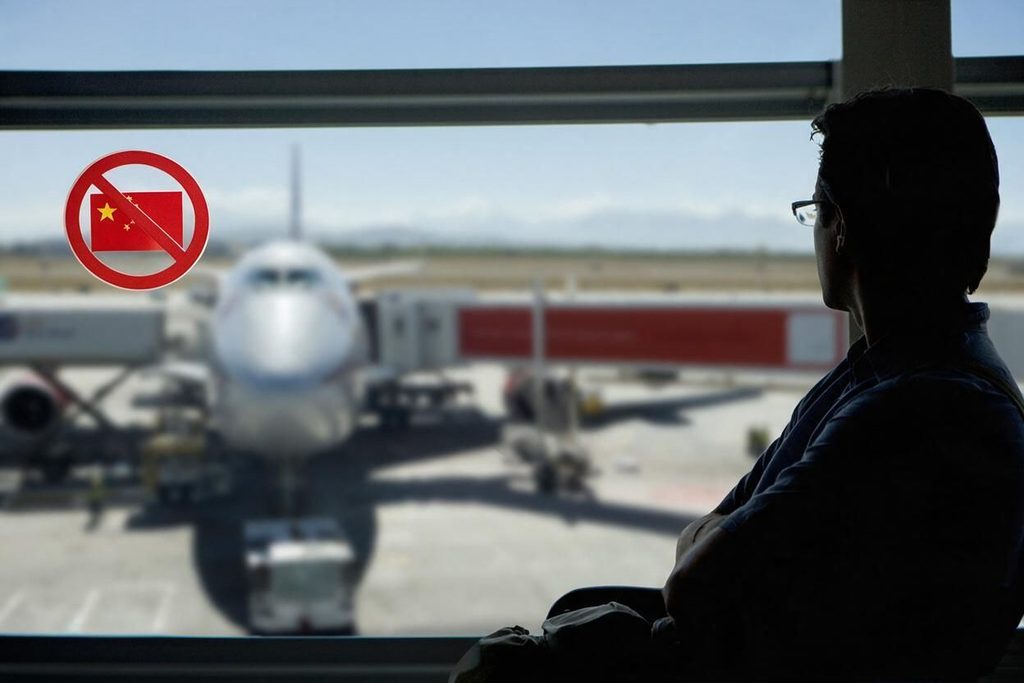
Cutting-edge technology does not emerge spontaneously from silicon wafers. It requires an extraordinarily tiny cadre of elite scientists and engineers who intuitively understand how to train massive models, optimise compute architecture, and work around hardware bottlenecks. Unlike an advanced extreme ultraviolet (EUV) machine, that critical intellectual capital can pack a suitcase, walk through an airport terminal, and board an international flight.
Now, Beijing appears to be taking drastic steps to slam that departure gate shut.
According to recent reporting from Bloomberg, Chinese authorities have broadened overseas travel clearance requirements. The mandates no longer target solely key artificial intelligence and semiconductor executives; they reportedly extend down into the private lives of their immediate families, requiring official pre-approval for foreign travel by spouses and children.
On paper, the bureaucratic rationale is obvious: safeguard sovereign technological secrets and stem the flow of talent to Western rivals. But if history, game theory, and engineering culture teach us anything, it is that forcing researchers into a digital gilded cage rarely yields technological supremacy. In fact, it often triggers the exact collapse it was designed to prevent.
The Policy Shift: Extending State Oversight to the Living Room
The current wave of geopolitical friction has long affected the upper echelons of Chinese industry. In early 2026, reports surfaced detailing how top-tier machine learning specialists and executives at firms like DeepSeek and Alibaba required formal state clearance before leaving the country.
The latest development represents a massive escalation in scope.
By pulling spouses and children into the regulatory net, the state fundamentally redefines the relationship between technical talent and sovereign security:
Scope of Oversight: Selected founders, chief architects, and senior researchers working on strategically sensitive models and semiconductor packaging are being formally notified that their households face travel restrictions.
The Approval Hurdle: While this does not represent a blanket travel ban, requiring prior state sign-off transforms standard family logistics—from overseas university enrolments to holidays or medical emergencies—into potential geopolitical friction points.
Ambiguity and Discretion: The enforcement mechanism remains deliberately opaque. It is unclear which state agencies hold final veto power, how long reviews take, or where the line between "commercial developer" and "national security asset" is drawn.
Whenever an authoritarian apparatus attempts to ring-fence intellectual capital by monitoring families, it reveals profound institutional anxiety. It exposes an uncomfortable truth: despite outspending rivals on domestic infrastructure, the state recognises that its AI ecosystem remains fragile.
Why Human Capital Trumps Silicon
Why would authorities risk domestic pushback by imposing restrictions on family vacations and foreign schooling? To understand the move, one must grasp how modern AI development works.
Hardware is reproducible; intuition is not.
You can stockpile millions of illicitly acquired H100s, build sovereign high-bandwidth memory facilities, and pour state subsidies into domestic fabrication plants like SMIC. But without the individuals who understand the nuanced alchemy of transformer training runs, dynamic loss landscapes, and distributed cluster orchestration, those data centres are merely expensive space heaters.
| Strategic Asset | Reproducibility | Strategic Vulnerability | Regulatory Vulnerability |
| Advanced Packaging & Lithography | High capital barrier, physical supply chain bottlenecks | Factory interdiction, export controls | Targeted export bans, equipment sanctions |
| Model Weights & Codebases | Instantly cloneable, software-level control | Data exfiltration, IP theft | Air-gapping, internal data firewalls |
| Elite Engineering Tacit Knowledge | Non-reproducible without years of lived trial and error | Defection, brain drain, remote emigration | Exit permits, family travel restrictions |
A tremendous portion of advanced AI expertise exists purely as tacit knowledge. It lives in the heads of the people who spent years troubleshooting why a multi-node training run suddenly diverged at step 40,000. That judgement cannot be subpoenaed, captured in documentation, or locked in a safe. It walks away when the researcher leaves.
From an isolationist defence standpoint, restricting mobility looks like risk mitigation. In reality, it treats high-level innovators as state utilities rather than voluntary participants in an innovation economy.
The Unintended Consequence: Preemptive Emigration
When you construct high walls around an industry, you alter the cost-benefit analysis for every participant inside it.
Talented engineers evaluate prospective careers through multiple lenses. Competitive compensation, access to compute, and high-calibre peers matter immensely. But fundamental personal liberty, family stability, and international mobility matter just as much.
State Imposes Family Travel Veto
        │
        ▼
Heightened Career Uncertainty
        │
        ├───────────────────────────────────────────┐
        ▼                                           ▼
Senior Executives Comply                      Mid-Level Researchers Re-evaluate
(Assets & Status Entangled)                 (High International Mobility)
        │                                           │
        ▼                                           ▼
Diminishing Innovation Appetite               Preemptive Emigration to US / EU / Singapore
        │                                           │
        └─────────────────────┬─────────────────────┘
                              ▼
           Stagnation of Domestic AI Ecosystem
The greatest danger to China’s AI ambitions is not that current executives will stage a mass walkout tomorrow. Rather, it is the invisible, downstream chilling effect on emerging talent:
- The Preemptive Exit: Mid-level researchers who are not yet subject to the travel mandate will realise that taking a promotion or publishing breakthrough work could trigger a state leash on their families. The rational move is to exit the jurisdiction before crossing that visibility threshold.
- Diaspora Hesitation: China’s rapid tech acceleration over the past two decades relied heavily on the "Sea Turtles" (Hai Gui)—elite researchers educated at Stanford, MIT, or Cambridge who returned home to found frontier startups. If moving back to Shenzhen or Beijing means surrendering their family’s global mobility, the talent pipeline dries up instantly.
- Internal Risk Aversion: Highly monitored researchers stop pursuing radical, disruptive ideas. Innovation requires psychological safety; when state security apparatuses monitor your family's travel plans, the incentive shifts from taking bold technical risks to practising safe, bureaucratic survivalism.
The Global Supply Chain Fallout
For Western multinational enterprises, international venture funds, and academic institutions, these developments introduce an unpredictable layer of operational friction.
Global tech partnerships operate on the baseline assumption that key technical personnel can travel for integration, standards conventions, investor roadshows, and academic conferences. If a Chinese counterpart’s key technical architect cannot leave the country without inter-agency vetting, joint ventures face single-point-of-failure vulnerabilities:
Sovereign Counterparty Risk: Dependencies on specific overseas talent become liabilities when state bureaucracy dictates whether an engineer can physically inspect an overseas deployment.
Forking Ecosystems: The divide between the Western AI stack and the Chinese domestic stack will widen. Cross-pollination through open-source communities and academic symposiums like NeurIPS will contract as physical attendance becomes a bureaucratic liability.
Dual-Track Corporate Structures: Startups seeking international capital may be forced to split operations down the middle, establishing fully autonomous offshore teams to retain international staff who refuse to live under domestic travel oversight.
Innovation Cannot Be Coerced
Beijing finds itself caught in a profound structural paradox. It aims to lead the world in artificial intelligence by 2030, a goal that demands a dynamic, globally integrated, highly attractive research ecosystem. Yet, its instinctual response to competitive pressure is centralised control and border enforcement.
Technological leadership is not a zero-sum game won by holding the most brilliant minds hostage behind bureaucratic red tape. By turning world-class researchers into state-monitored assets, authorities run the risk of transforming an engine of innovation into an insular enclave.
Hardware can be sequestered, subsidised, and stockpiled. Genius cannot. If working at the frontier of Chinese computer science requires trading away your family’s freedom of movement, the most capable minds will inevitably find somewhere else to build the future.