By Tony Fiddis: China Analyst
The Great Himalayan Détente Is an Illusion: Why Modi and Xi’s Limited Truce Changes Nothing
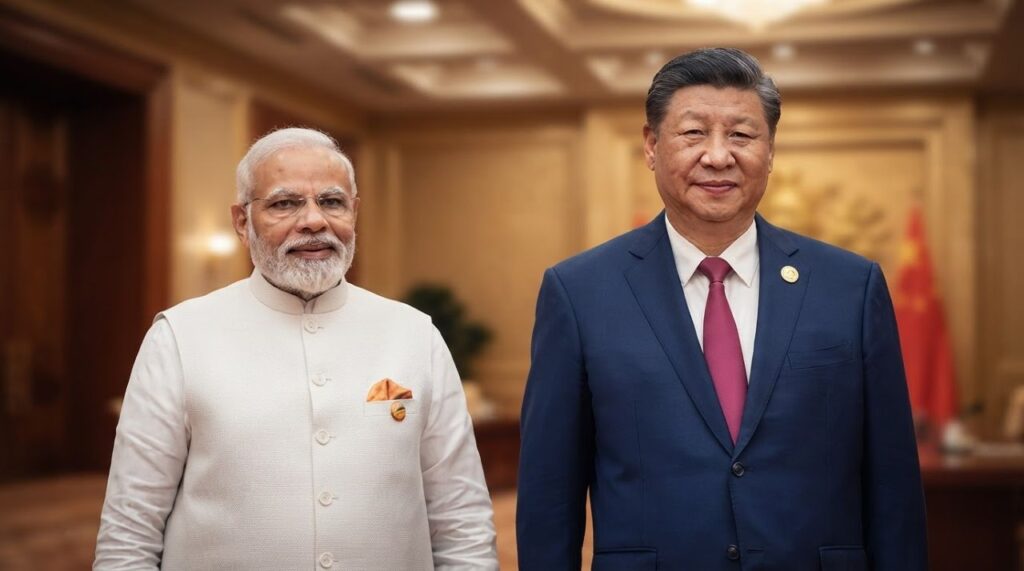
Xi Jinping’s arrival in New Delhi for the 18th BRICS summit marks his first official visit to Indian soil since the informal seaside summit in Mamallapuram in 2019. On paper, the optics are historic. After years of diplomatic paralysis, Chinese and Indian officials are parading a long-awaited bilateral meeting between Xi and Indian Prime Minister Narendra Modi as proof that the Asian century’s two defining giants can finally mend fences.
Do not be fooled by the handshakes.
While the international commentariat rushes to herald a major Asian thaw, the reality on the ground tells an entirely different story. As China analyst Tony Fiddis of China Update Consultancy astutely points out, this sudden burst of diplomatic civility is not a transformative structural reconciliation. It is an exercise in tactical pragmatism designed to manage escalating vulnerabilities on both sides.
The strategic weather system between Beijing and New Delhi remains deeply hostile. What we are witnessing is merely a temporary break in the clouds.
The Ghost of Galwan: When Ten Steps Back Outweigh Three Steps Forward
To comprehend why this bilateral exchange is largely theatre, one must look at the scar tissue left behind by recent history. For decades, Beijing and New Delhi operated under a fragile, mutually beneficial fiction: they agreed to shelve their undemarcated 3,488-kilometre border dispute along the Line of Actual Control (LAC) while aggressively scaling up bilateral trade and commercial ties.
That post-1988 consensus was permanently shattered in June 2020.
The brutal, hand-to-hand clashes in the freezing heights of the Galwan Valley did not just claim the lives of twenty Indian soldiers and at least four Chinese troops; they fundamentally demolished India’s strategic trust in Beijing. Overnight, the border was militarised to an extent unseen since the 1962 war. New Delhi responded by:
Banning hundreds of Chinese mobile applications, including ubiquitous staples like TikTok and WeChat.
Barring state-backed Chinese telecommunications vendors Huawei and ZTE from participating in India’s lucrative 5G rollouts.
Freezing Chinese foreign direct investment via Press Note 3, mandating strict prior government clearance for any capital flowing from nations sharing land borders with India.
While military commanders and diplomats have spent the past two years negotiating incremental disengagement zones and patched-up patrolling protocols, the Line of Actual Control remains a volatile tripwire. Former Indian ambassador Gautam Bambawale framed the dynamic with surgical precision: the 2020 Galwan crisis pushed Sino-Indian relations ten steps backward. The subsequent disengagement agreements and diplomatic niceties represent barely three steps forward.
Modi and Xi may sit down in New Delhi to discuss border stability, but neither side is prepared to cede sovereign territory, dismantle permanent military infrastructure, or withdraw forward-deployed battle groups. The cold peace remains perilously fragile.
The Economic Paradox: Choking on Chinese Dependency
Beyond the frozen ridges of Ladakh, trade remains New Delhi’s most glaring vulnerability—and Beijing’s most effective leverage.
Despite public rhetoric advocating Aatmanirbhar Bharat (self-reliant India) and aggressive "Make in India" campaigns, New Delhi finds itself locked in a deeply asymmetric economic embrace with China. India’s annual goods trade deficit with Beijing consistently hovers near an eye-watering $100 billion.
| Strategic Industrial Sector | Structural Reliance on Chinese Inputs | Domestic Economic Impact |
| Pharmaceuticals (APIs) | ~70% sourced from Chinese chemical suppliers | High vulnerability to supply chain export curbs |
| Solar Photovoltaics | >75% of silicon wafers and cells imported from China | Critical bottleneck for India’s green energy targets |
| Electronics & Hardware | Over 60% of circuit boards and components imported | Stifles domestic value addition and smartphone assembly |
India simply cannot power its industrial expansion without Chinese capital goods, intermediate chemicals, and precision manufacturing equipment. Indian policymakers are now confronting an uncomfortable economic reality: total decoupling from Beijing is an industrial pipe dream that throttles domestic growth.
Consequently, technocrats within New Delhi’s Ministry of Finance have begun advocating for a recalibrated approach. Instead of an outright ban on Chinese capital, India is quietly clearing the path for carefully ring-fenced, minority-stake joint ventures. If Chinese conglomerates want access to India’s booming domestic market, they must transfer proprietary manufacturing know-how, license critical technology, and build supply chains alongside Indian partners.
Xi recognises this economic leverage. By dangling access to green energy technology, industrial equipment, and component supply lines, Beijing seeks to keep India’s industrial base tethered to the Chinese manufacturing ecosystem.
Global Crosscurrents: The Squeeze from Washington
                  ┌───────────────────────────────┐
                  │   Washington's Unpredictable  │
                  │   Geopolitical & Trade Shifts │
                  └───────────────┬───────────────┘
                                  │
                 ┌────────────────┴────────────────┐
                 ▼                                 ▼
   ┌───────────────────────────┐     ┌───────────────────────────┐
   │    Beijing's Dilemma      │     │    New Delhi's Dilemma    │
   │  • Tech export sanctions  │     │  • Tariff vulnerabilities │
   │  • Western de-risking     │     │  • Scrutiny on Russian oil│
   │  • Fear of India-US axis  │     │  • Reluctance to be pawn  │
   └─────────────┬─────────────┘     └─────────────┬─────────────┘
                 │                                 │
                 └────────────────┬────────────────┘
                                  ▼
                  ┌───────────────────────────────┐
                  │ Pragmatic Tactical Thaw       │
                  │ (Lower border tensions while  │
                  │ structural rivalry escalates) │
                  └───────────────────────────────┘
Why are Modi and Xi choosing to negotiate now, after years of hostile standoff? The answer lies not in mutual affection but in mounting external pressure from Washington.
For Beijing, the calculation is straightforward. Squeezed by punitive Western technology restrictions, escalating tariff regimes, and coordinated industrial "de-risking" strategies led by the United States, China cannot afford a hostile, two-front geopolitical confrontation. The prospect of India fully embedding itself into a formal US-led containment coalition—anchored by the Quad—is Beijing’s strategic nightmare. A diplomatic overture to New Delhi costs Xi very little while driving a wedge between India and its Western partners.
For New Delhi, strategic autonomy remains paramount. India has faced recurring Western criticism over its massive purchases of discounted Russian crude oil and its reluctance to transform the Quad into a rigid military alliance. Facing unpredictable trade shocks and tariff threats from the West, Modi refuses to be treated as a junior partner in Washington’s geopolitical chessboard.
Re-engaging Beijing provides New Delhi with diplomatic breathing room, signalling to the West that India has geopolitical alternatives.
Two Hemispheres, One Crown: The Battle for the Global South
Even if Modi and Xi can resolve their immediate trade headaches and establish cold-weather demilitarisation zones, their fundamental long-term ambitions remain utterly irreconcilable. Both civilisations view themselves as the rightful, pre-eminent leaders of the post-Western Global South.
Beijing's Vision: China seeks to transform multilateral platforms like BRICS and the Shanghai Cooperation Organisation (SCO) into explicitly anti-Western vehicles, restructuring international finance around the digital yuan and locking developing nations into its debt-backed Belt and Road Initiative.
New Delhi's Counter-Play: India envisions a multipolar, non-Western order where developing nations maintain complete strategic autonomy without succumbing to Chinese economic hegemony or clientelism.
The Maritime Frontline: Beyond the Himalayan ridge, China’s naval expansion across the Indian Ocean—via strategic deep-water ports in Pakistan (Gwadar), Sri Lanka (Hambantota), and Djibouti—directly threatens India’s traditional sphere of maritime security. In return, India continues to deepen naval logistics pacts across the Indo-Pacific.
Tactical Détente, Strategic Impasse
The meeting between Modi and Xi in New Delhi is a textbook case of realpolitik. Both leaders are dealing with domestic economic headwinds, uncertain global markets, and shifting political currents in the West. Cooling the temperature along the Himalayas serves their immediate political interests.
Yet, lowering the diplomatic temperature does not alter the underlying climate.
India will not forget the blood spilt at Galwan, nor will it dismantle its defensive apparatus along the Line of Actual Control. China will not abandon its encirclement of the Indian subcontinent, nor will it surrender its strategic alignment with Pakistan.
Xi Jinping’s visit may deliver handshake photo opportunities, polite communiqués, and a handful of targeted manufacturing joint ventures. But underneath the choreography lies an enduring structural rivalry that neither leader can bridge. This is not a geopolitical reset; it is merely an operational pause in a multi-generational cold war.