
Separating Plague Hype from Hard Science
Whenever the word “plague” flickers across the international news ticker, public reaction is nearly instantaneous. It taps directly into our collective, deep-seated anxieties about historical pandemics and clandestine biological labs.
The latest wave of alarm originates in the Siberian city of Irkutsk, where a 28-year-old laboratory worker at a dedicated anti-plague research institute tragically died from acute respiratory failure. What followed was a predictable collision of fragmented social media accounts, breathless headlines, official denials, and diplomatic queries stretching across the border into Beijing.
Yet beneath the alarming vocabulary and sensational speculation lies an essential epidemiological distinction: an unexplained, severe respiratory death within a specialised biomedical facility is an alarming signal, but it is not proof of a confirmed plague outbreak.
Understanding what is actually occurring on the ground requires looking closely at the scientific mechanisms, the geopolitical cross-border realities, and the critical boundary between healthy scepticism and unevidenced panic.
The Irkutsk Incident: What We Know and What Remains Unverified
The core facts surrounding the event are concerning enough on their own without embellishment:
A 28-year-old female researcher employed at an anti-plague research institute in Russia’s Irkutsk region fell critically ill with aggressive, rapidly deteriorating pneumonia and subsequently died.
Following her death, regional health authorities placed nearly 200 of her close contacts under active medical surveillance and isolation protocols.
To date, not a single contact has tested positive for plague (Yersinia pestis), and Russian health authorities have formally classified her cause of death as "severe pneumonia of unknown aetiology".
Almost immediately, unverified local reports began circulating alleging that the researcher suffered an accidental laboratory exposure—specifically, dropping a glass test tube containing live culture.
Rospotrebnadzor, Russia’s federal consumer rights and human welfare watchdog responsible for biosafety oversight, swiftly intervened to reject that narrative. In an official briefing, the agency asserted that an exhaustive internal inspection revealed no breach of biocontainment, no broken vials containing Category I pathogens, and no trace of workplace-associated microorganisms in the deceased worker’s initial diagnostic panels.
This leaves an uncomfortable gap in the narrative. "Pneumonia of unknown origin" is deeply unsatisfying when it strikes an otherwise healthy young adult working in a high-consequence pathogen facility. But an unanswered clinical question is an epidemiological puzzle—not confirmation of a pathogen escape.
The Microbiology of Yersinia pestis: The Realities of Pneumonic Plague
To understand why international epidemiologists take even an unconfirmed report seriously, one must look at the specific pathology of plague.
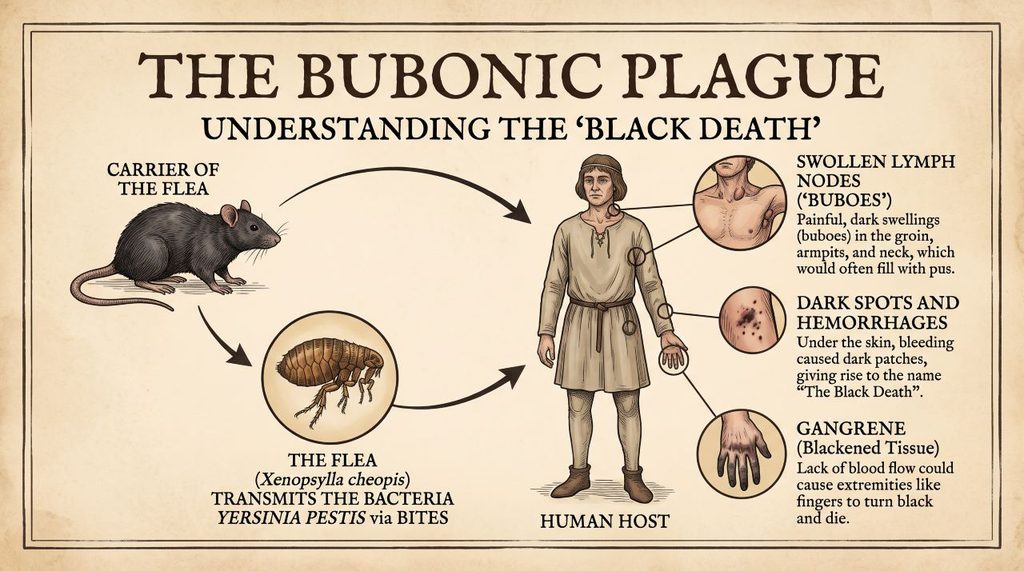
Plague, caused by the bacterium Yersinia pestis, primarily exists in nature as a zoonotic disease circulating among wild rodents and their fleas (bubonic plague). However, when the bacteria seed or enter the pulmonary system directly, it manifests as pneumonic plague—by far the deadliest and most aggressive presentation.
+---------------------------------------------------------------------------------+
| CLINICAL PROFILE: PNEUMONIC PLAGUE                                              |
|                                                                                 |
| Causative Agent:     Yersinia pestis (Gram-negative coccobacillus)               |
| Primary Route:       Inhalation of respiratory droplets or systemic seeding     |
| Incubation Period:   Typically 24 hours to 3 days                               |
| Untreated Fatality:  Approaching 100% (often within 18 to 24 hours of onset)     |
| Efficacy of Therapy: Highly responsive to early aminoglycosides / fluoroquinolones|
+---------------------------------------------------------------------------------+
Unlike bubonic plague, pneumonic plague can transmit directly from person to person via airborne respiratory droplets. Without intervention, it induces rapid tissue necrosis in the lungs, overwhelming septicaemia, and respiratory collapse.
However, modern medicine changes the equation entirely: early therapeutic intervention transforms a near-certain fatality into a manageable infection. Broad-spectrum antibiotics—including streptomycin, gentamicin, doxycycline, and ciprofloxacin—are extraordinarily effective if administered promptly.
The fact that almost 200 contacts were quarantined without a single secondary case developing suggests that either the primary illness was not pneumonic plague, or the containment and prophylactic protocols were triggered swiftly enough to break any potential chain of transmission.
Cross-Border Dynamics: China, Mongolia, and the Eurasian Transit Hub
While Irkutsk is located in southeastern Siberia north of Mongolia rather than directly on the Sino-Russian border, geography in the modern era is dictated by transit corridors rather than raw distance.
Irkutsk serves as a primary logistical node along the Trans-Siberian corridor, featuring regular passenger rail lines and direct international flight paths connecting Siberia to major Chinese trade hubs, including Beijing and Harbin.
Coordinated Surveillance Along the Border
When asked about the situation during a regular press briefing, Chinese Foreign Ministry spokesperson Guo Jiakun noted that Beijing and Moscow maintain an active, real-time bilateral mechanism for cross-border infectious disease control.
This coordination is not purely theoretical. Just weeks before the incident, Russian anti-plague researchers and Chinese epidemiologists conducted a scheduled joint emergency exercise focusing specifically on detecting zoonotic spillover and containing infectious disease spikes across cross-border transport routes. While some online commentary attempted to retroactively link the training drill to the researcher’s death, institutional preparedness exercises are routine in regions where natural plague reservoirs are endemic.
Concurrently, Mongolia’s Ministry of Health evaluated the situational risk as low, maintaining its standard border port health screenings without elevating regional alert levels.
Scepticism vs. Evidence: Navigating the Information Void
It is entirely reasonable to approach official reassurances from state authorities with critical scrutiny. Both Moscow and Beijing possess histories of opaque information management regarding biological incidents and public health crises.
The World Health Organization (WHO) confirmed it reached out to Russian authorities through International Health Regulations (IHR) channels to request full clinical and diagnostic data. Moscow has maintained that all reporting obligations have been met and that the regional epidemiological posture remains stable.
Yet an essential tenet of investigative journalism and science communication must be upheld: the absence of complete transparency cannot be treated as positive evidence of a catastrophe.
A dropped test tube remains an unsubstantiated internet rumor until corroborated by physical evidence, biosafety inspection logs, or definitive whistleblowing. An unexplained respiratory death demands a thorough, transparent differential diagnosis—not an immediate assumption of a biosecurity breakdown.
Looking Forward: The Responsible Epidemiological Path
The most constructive posture to adopt in situations like the Irkutsk incident involves three clear imperatives:
- Demand Independent Verification: Moscow should share sequencing data and autopsy microbiology with international public health bodies to clear up the diagnostic ambiguity once and for all.
- Monitor the Incubation Window: Because Yersinia pestis presents an incubation timeline of just a few days, the fact that contact surveillance cohorts have cleared without secondary cases is the single most reassuring empirical metric available.
- Preserve Scientific Precision: Treating an isolated, unverified clinical death as a runaway outbreak erodes public trust and fuels unnecessary panic.
Until independent microbiology confirms otherwise, the Irkutsk case remains a personal tragedy and an unresolved biosafety query—not the opening chapter of a Siberian contagion.