By Tony Fiddis: China Analyst
Diplomacy at the highest level is rarely about personal affection. It is about power, leverage, and the cold, unyielding reality of systemic vulnerability.
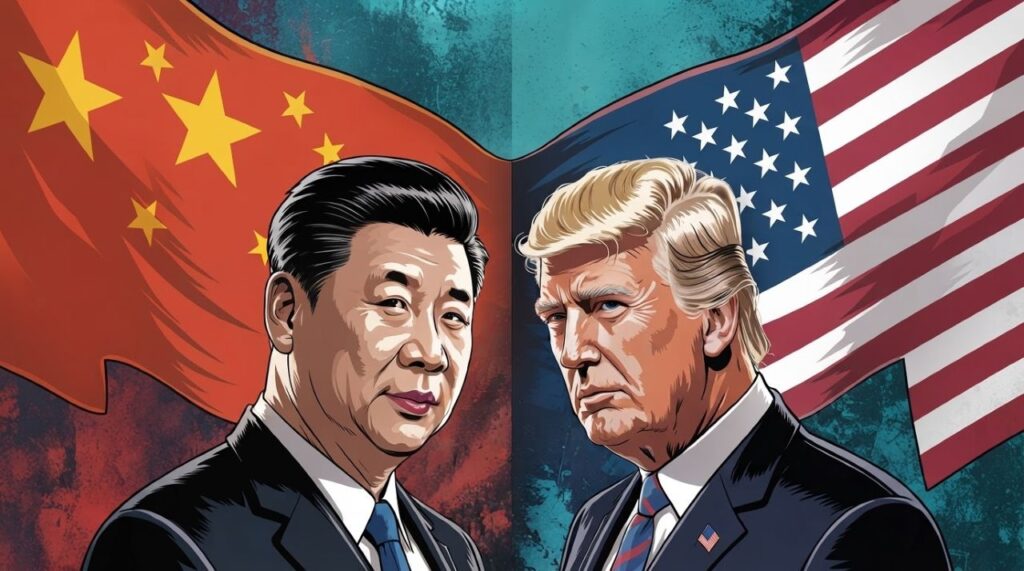
When Chinese President Xi Jinping touches down at Joint Base Andrews ahead of his summit with Donald Trump, the spectacle will be difficult to ignore. Trump is reportedly preparing to greet Xi directly on the tarmac—a personal reception that breaks sharply with the usual White House convention.
To the casual observer, this might look like theatrical pageantry. But in Beijing’s political lexicon, optics are strategy. A tarmac reception conveys peer-power equality. It signals to domestic audiences in China and allies across the globe that Beijing is not arriving as a supplicant to be lectured in the Oval Office but as an indispensable superpower meeting Washington on equal footing.
Yet beneath the polished choreography lies an uncomfortable truth: this summit is not about forging lasting peace. It is an exercise in damage limitation between two deeply interdependent rivals trapped in an escalating economic war of attrition.
Fact-Checking the Lineup: Setting the Table in New York
Before the red carpets roll out in Washington, the real mechanical grind is taking place behind closed doors in Manhattan.
A preliminary factual correction is vital here: initial drafts of diplomatic schedules mistakenly referenced "Vice Premier Li Feng". In reality, Beijing’s point man on macroeconomic strategy and cross-border trade is Vice Premier He Lifeng. He Lifeng has convened with U.S. Treasury Secretary Scott Bessent and U.S. Trade Representative Jamieson Greer (often reported as Jameson Grier).
Their mandate? Salvage the fragile economic architecture hammered out in late 2025 during the APEC summit in South Korea—colloquially known as the Busan trade truce.
Under that Busan framework, both administrations stepped back from the abyss of triple-digit tariffs, establishing a fragile ceiling to keep bilateral trade from collapsing entirely. But that truce carries a hard expiration date in November.
Now, the two delegations are clashing over the clock:
Beijing’s Stance: China wants a comprehensive extension lasting through the remainder of Trump’s presidential term. For policymakers in Zhongnanhai, multi-year predictability is critical to stabilise domestic manufacturing, project confidence to multinational investors, and cushion an economy navigating real estate headwinds and shifting trade flows.
Washington’s Stance: The Trump administration is offering a narrow six-month extension. Washington’s calculus is simple: keeping the deadline tight prevents Beijing from getting comfortable, preserving tariff leverage over unresolved disputes surrounding industrial overcapacity, technology access, and intellectual property.
This gulf between six months and several years isn't mere bureaucratic squabbling. For global supply chains, a rolling half-year extension is an operational nightmare. It leaves boardroom executives, logistics planners, and manufacturers paralysed—unable to forecast capital expenditure, long-term sourcing, or retail pricing while living under the sword of Damocles.
The Chokehold: The Illusion of Rare Earth Dominance
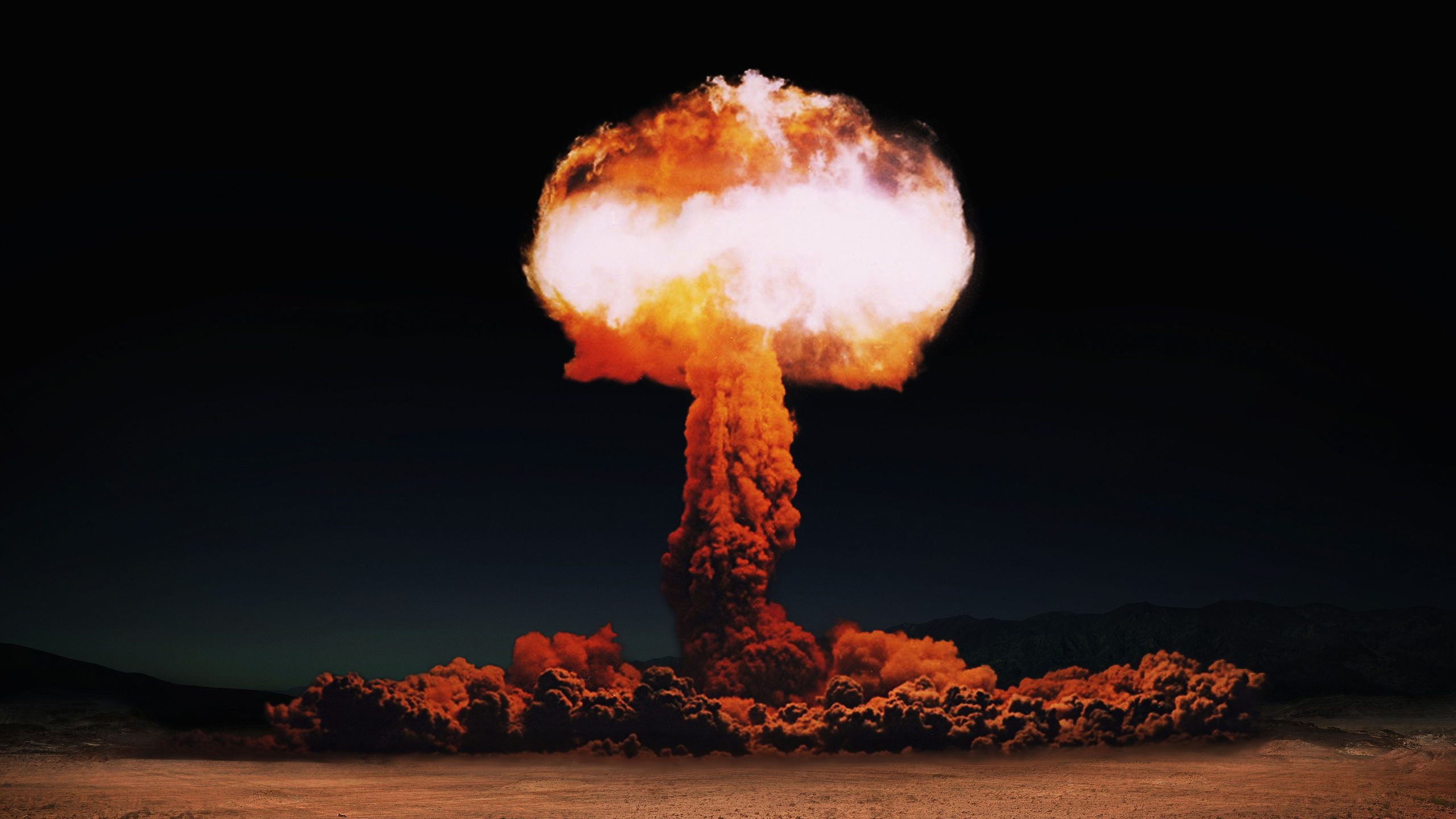
If tariffs represent the conventional artillery of this economic skirmish, critical minerals are the strategic nuclear option.
Washington has grown increasingly vocal over Beijing’s handling of rare earth elements (REEs) and critical magnet exports, arguing that China has failed to uphold its Busan commitments. Meanwhile, Beijing's expanding export controls—which have disrupted supply chains in Japan, Europe, and the U.S.—have driven home just how asymmetrical this dependency remains.
These 17 obscure elements are the indispensable lifeblood of the 21st-century economy:
Permanent Magnets (Neodymium, Dysprosium): Essential for electric vehicle drivetrains, wind turbine generators, and precision robotics.
Defence Hardware: Critical components in radar arrays, missile guidance packages, and the F-35 fighter jet.
Advanced Electronics: Core inputs across modern semiconductors, telecommunications, and industrial automation.
China’s grip on this market is staggering. While the raw ores exist across the globe, China commands roughly 60% of worldwide mining and controls upwards of 85% to 90% of global processing and refining capacity. Mining the rock is relatively straightforward; cracking the complex chemical and radiological cracking processes at an industrial scale without devastating margins or local ecosystems is an engineering moat that China spent three decades building.
However, weaponising that monopoly carries diminishing returns.
By throttling exports, Beijing undeniably inflicts acute, short-term pain on Western supply chains. But in doing so, it destroys its own long-term leverage. Every export restriction acts as a direct subsidy to Western de-risking initiatives. The moment rare earths become a geopolitical weapon rather than a commercial commodity, private capital and state balance sheets flood into alternative refining facilities in Texas, Western Australia, and Southeast Asia.
History provides a warning: when Beijing restricted rare-earth shipments to Japan during the 2010 Senkaku boat collision incident, Tokyo responded by financing Lynas in Australia, slashing Japan’s direct Chinese rare-earth dependence from over 90% down to under 60%. Overplaying the mineral hand today risks accelerating that exact decoupling across North America and Europe.
Energy Vulnerabilities and the Shadow of the Middle East
The diplomatic dance between Foreign Minister Wang Yi and Secretary of State Marco Rubio highlighted an area where commercial rivalry collides directly with physical security: the Middle East.
While Washington fixates on Chinese factory overcapacity and advanced microchips, Beijing faces a foundational vulnerability: energy security.
China imports the vast majority of its crude oil, with a huge volume originating from the Persian Gulf and transiting vulnerable maritime checkpoints like the Strait of Hormuz and the Strait of Malacca. Escalating conflicts in the Middle East and intensified U.S. sanctions enforcement on Iranian crude create a severe headache for Chinese planners. China relies heavily on heavily discounted Iranian barrels to fuel independent refineries. Any severe regional escalation threatens not just global inflation but also the operational margins of China’s domestic petrochemical complex.
This dynamic reveals an ironic symmetry. The United States needs Beijing’s rare earths and consumer goods to tame inflation and maintain high-tech manufacturing. Simultaneously, China relies on unimpeded international maritime transit and global macroeconomic stability to sustain its export-driven engine.
A Summit of Survival, Not Solutions
Neither side enters the September 24 summit under any illusions.
Donald Trump is managing an American economy sensitive to price shocks, where sweeping blanket tariffs carry real political blowback at the checkout counter. Xi Jinping is navigating domestic industrial adjustments, deflationary pressures, and an international landscape increasingly wary of Chinese technological integration.
The Andrews tarmac greeting will provide the necessary high-level imagery. The subsequent communique will likely tout managed guardrails, potential agricultural purchase targets, and a temporary reprieve from escalating trade duties.
Make no mistake: a six-month or even one-year patch does not fix the fundamental structural divergence between a declining Pax Americana and an assertive China. It simply resets the timer on a bomb that neither side knows how to dismantle.